Negative Pressure Wound Therapy Problems Linked to Deaths, Injuries
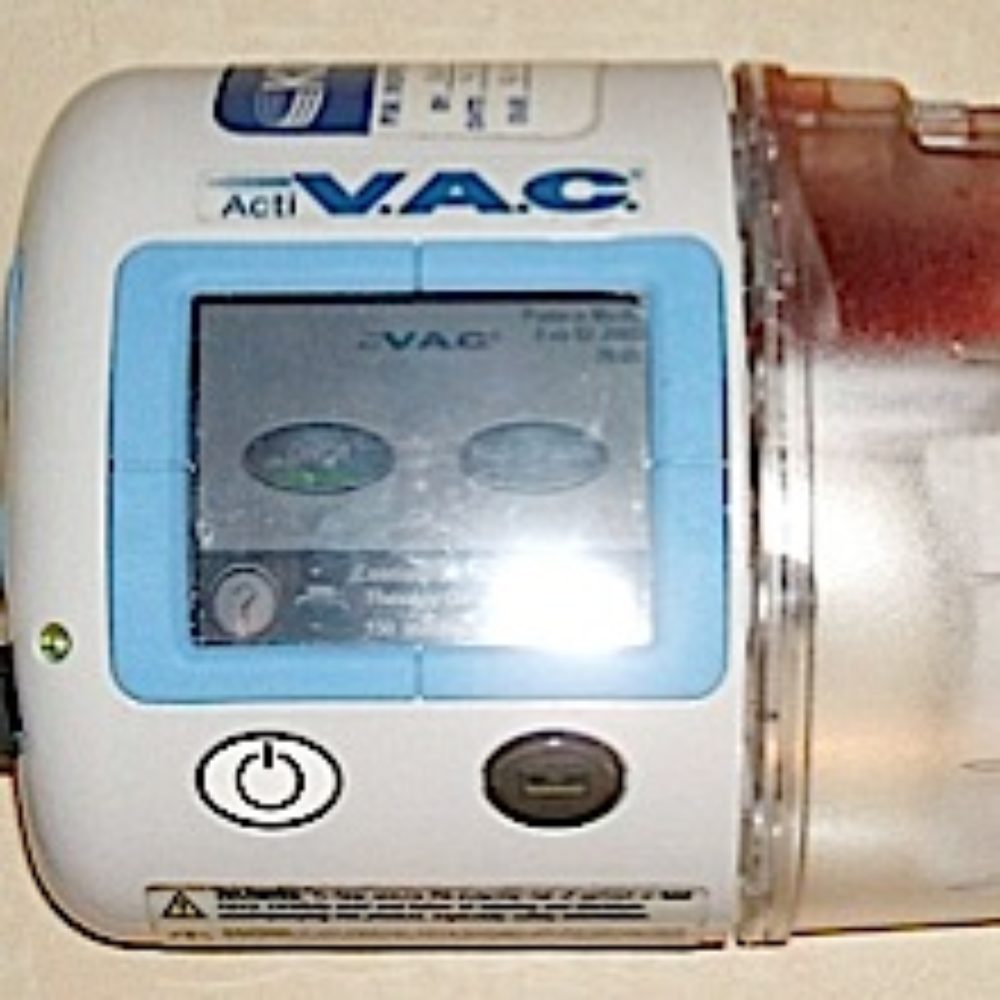
The FDA issued a MedWatch safety alert on Monday, warning healthcare providers about potential problems with Negative Pressure Wound Therapy (NPWT) systems, which have caused a number of people to bleed to death or suffer other severe injuries.
Negative Pressure Wound Therapy involves the application of negative pressure on a wound and maintaining a vacuum around it. This is done to extract fluids and infectious materials from the wound, and to cause it to dry out, or desiccate. Negative Pressure Wound Therapy is most commonly used with burns, flaps, ulcers and grafts, but it is contraindicated for several types of injuries, including wounds where there are exposed nerves, organs and vasculature.
The Preliminary Public Health Notification issued by the FDA indicates that healthcare professionals should carefully select which patients undergo Negative Pressure Wound Therapy, and warns them to closely monitor all patients, as many are sent home with the kits. The FDA has received reports of at least six deaths and 77 injuries associated with the Negative Pressure Wound Therapy systems over the past two years.
Did You Know?
Millions of Philips CPAP Machines Recalled
Philips DreamStation, CPAP and BiPAP machines sold in recent years may pose a risk of cancer, lung damage and other injuries.
Learn MoreIn all six deaths, and 17 of the injuries, the patients experienced severe bleeding. In other cases, the Negative Pressure Wound Therapy problems involved serious infection caused by the original wound or due to pieces of dressing or foam in the wound. Although many patients are sent home with Negative Pressure Wound Therapy kits, the FDA found these problems occurred just as commonly in hospitals and nursing homes.
The FDA warned health care professionals to take special care in determining which patients to give NPWT kits to use at home, and recommended that they take special care in making sure that patients or caregivers know how to use the systems, how to recognize potential problems, and what to do in case there is a complication.
The FDA also provided advice for patients using the Negative Pressure Wound Therapy at home. According to the FDA, patients should:
- Receive adequate training from your doctor, nurse, or home healthcare provider so that you understand how to use your NPWT device. Demonstrate to your trainer how to use NPWT to make sure you are doing it properly.
- Understand the possible complications that may be associated with using your NPWT device. Watch especially for bleeding, which can be life-threatening. If you see signs of bleeding, seek medical assistance immediately.
- Get NPWT patient instructions (labeling) from your doctor, home healthcare provider, NPWT distributor, or the manufacturer’s website. Keep these instructions where you can easily find them.
- Talk to your doctor if you do not feel capable of managing the NPWT device at home. He or she might recommend that you have help from an appropriate caregiver.
The FDA is continuing to review the safety of Negative Pressure Wound Therapy systems and is monitoring for more adverse events. The agency proposed no action, but said that it will make any new information available that might affect the use of such systems.
Image courtesy of Noles1984/Wikipedia from Public Domain. KCI Anti V.A.C. pump used to create negative pressure and used in conjunction with a variety of KCI dressings.
Want a weekly update on top lawsuits, recalls & warnings?
"*" indicates required fields


12 Comments


JenniferJanuary 11, 2024 at 6:47 am
I believed that the wound vac was doing wonders it truly was with that said I contacted wound vac company wanting records I received a call from their nurse she seemed genuine I gave her all the information about what happened I have never heard from again, crazy so now I wonder if it was not just the medical staffs fault but the wound vac machine fault as well
JenniferFebruary 19, 2023 at 9:24 am
I think the wound vac was great.it did what it was supposed to do .I think the people that put it on the patient or change the wound dressing are at fault.. one morning in hospital wound care came to care for my husband the empty bag replaced it anyhow 5 hours later I got a call saying my husband was dying I noticed the vac bag was full of dark blood with particles of his back were In it ..the nu[Show More]I think the wound vac was great.it did what it was supposed to do .I think the people that put it on the patient or change the wound dressing are at fault.. one morning in hospital wound care came to care for my husband the empty bag replaced it anyhow 5 hours later I got a call saying my husband was dying I noticed the vac bag was full of dark blood with particles of his back were In it ..the nurse never came and checked on him for 5 hours I believe her neglect caused it to suck the life outvof my husband he died 4 days later
khalidJune 19, 2021 at 8:12 am
Looking for Vac Wound dressing device dealer in Kingdom of Saudi Arabia
DavidMay 4, 2018 at 9:38 pm
My mother died about 6 months or less after having a wound vac suck the life out of her. She wasn't the same since. My Mother said, " I don't want this thing on me. It's sucking all the nutrients out me. I can feel it".
DarrellJuly 4, 2014 at 2:38 pm
I had a Quadruple Bypass July 5th 2012. And I had an E-coli infection set in a couple weeks later ,and then I was sent to the hospital .The doctor re cut me open and installed a wound vac for 21 days, and after that they sent me home for two weeks I had a pic line in my arm and gave myself antibiotics for two more weeks. I have had some back pain every since the surgerys . While visiting with my [Show More]I had a Quadruple Bypass July 5th 2012. And I had an E-coli infection set in a couple weeks later ,and then I was sent to the hospital .The doctor re cut me open and installed a wound vac for 21 days, and after that they sent me home for two weeks I had a pic line in my arm and gave myself antibiotics for two more weeks. I have had some back pain every since the surgerys . While visiting with my new heart doctor he did a stress test and found out that one of my Bypasses had collapsed so in November of 2013 I had a stint installed. Then I went to the pain management doctor that my hospital surgeon sent me to ,he had me get an MRI on my back and I have a buldging disc and a tare, alone with dried out nobbies on my spine where I believe the wound vac dried it out. Iam still waiting to have another surgery when my heart doctor will allow me to because of the plavix blood thinner I have to take.
SarahJanuary 11, 2011 at 5:34 pm
I am a healthcare professional and after reading your stories I do not see that the NPWT was the underlying problem in any of them. Wanda, your physician should have ensured that there was no problem going on. The first thing that should come into any wound care provider when a tunnel develops is infection inside coming out. Mike I am wondering if you are staying off of the wound, have they as[Show More]I am a healthcare professional and after reading your stories I do not see that the NPWT was the underlying problem in any of them. Wanda, your physician should have ensured that there was no problem going on. The first thing that should come into any wound care provider when a tunnel develops is infection inside coming out. Mike I am wondering if you are staying off of the wound, have they assessed your protein levels and had a seating evaluation done. Kathleen you really need to report that surgeon but that really had nothing to do with the NPWT. Debbie I have to ask is your husbands diabetes well controlled, has his protein levels been evaluated and was he keeping pressure off of the foot. Do you know if the HHA had been trained in use of the NPWT and why was the podiatrist debriding the wound if there was NPWT being used. That should have been a signal something was not right. YOu are absolutely correct, please make sure the caregivers are fully trained no matter what therapy is being used.
kathaleenApril 24, 2010 at 11:10 am
Debbie, I hope and pray your husband gets better and better. I will keep you in my prayers. And Paul's comments. How very sad...When good people are treated very wrong by certain Healthcare people...I don't think we should just let it go...Maybe the people should be trained better, or patients should be told about the FDA warning that came out Nov 2009. So many of us people just "trusted" the wron[Show More]Debbie, I hope and pray your husband gets better and better. I will keep you in my prayers. And Paul's comments. How very sad...When good people are treated very wrong by certain Healthcare people...I don't think we should just let it go...Maybe the people should be trained better, or patients should be told about the FDA warning that came out Nov 2009. So many of us people just "trusted" the wrong people.".. Some of us want to stand up for ourselves for what's right. SO we can live on, be mothers, wifes and grandmothers. It is a wonderful world when people Do take responsibility for themselves and stand up for others so the medical people will be aware that they should take their job very serious. Lives depend on it. God Bless you......
debbieApril 13, 2010 at 6:00 pm
My husband has had a non healing wound on the bottom of his foot, which his podiatrist debreed in January 2010. Since the incision was taking so long to close, the doctor ordered a wound vac for my husband to use. Since he began using the system, his wound has gotten larger & very painful ( from the liquid staying at the site instead of being vacuumed into the system) the entire site is now in[Show More]My husband has had a non healing wound on the bottom of his foot, which his podiatrist debreed in January 2010. Since the incision was taking so long to close, the doctor ordered a wound vac for my husband to use. Since he began using the system, his wound has gotten larger & very painful ( from the liquid staying at the site instead of being vacuumed into the system) the entire site is now infected, & he is scheduled to have more surgery at the end of this week. Even though we had a homecare nurse come 3 times a week to check on the device, it did not help my husband. Please make sure that the people involved in your care, are adaquately trained in the system that you are using. And, to the healthcare providers...please listen to your pts...how could a negative wound care system be so helpful, if the pt. is in constant pain & the wound is getting worse instead of better?
PaulApril 1, 2010 at 3:33 am
I find it interesting that people are always looking at ways to blame people. If you step back and look at everything that has happened in your life i.e are you healthy have you ever smoked do you regularly exercise, do you eat well, and are you still young? If not, have you considered that as you go through life maybe you are getting old maybe your body is not up to scratch, even though you are b[Show More]I find it interesting that people are always looking at ways to blame people. If you step back and look at everything that has happened in your life i.e are you healthy have you ever smoked do you regularly exercise, do you eat well, and are you still young? If not, have you considered that as you go through life maybe you are getting old maybe your body is not up to scratch, even though you are being told that we are living until a later age than we did 100yrs ago this is true but only because we choose to take medicines and ignore our level of health. of course as we get older we are more suseptable to disease and cancers. thus we visit our doctor and get another pill. odds are, not everything is going to work out. Maybe people should be more thankful that they have had a pleasant life take a bit of responsibility for themselves and stop thinking about suing someone because things havent gone down the fairytale pathway. if you have never done anything wrong in you life or done somthing that has caused consequences to someone else, then you are indeed a special person. If this is not you, just imagine what a wonderful world we would live in if people would take responsibility for themselves
kathaleenMarch 24, 2010 at 11:11 pm
On Nov 5th I had the first Back surgery, Something went very wrong. I had total procedures in all by Dec. 16th 2009. I had 2 sets of staples. Had a horrible spinal fluid leak. Developed infections, I too was placed on the Wound Vac for a couple of months. I got a yeast infection on my back. I am seeing an attorney tomorrow thank God. The Home health care people that came to my house twice a week.[Show More]On Nov 5th I had the first Back surgery, Something went very wrong. I had total procedures in all by Dec. 16th 2009. I had 2 sets of staples. Had a horrible spinal fluid leak. Developed infections, I too was placed on the Wound Vac for a couple of months. I got a yeast infection on my back. I am seeing an attorney tomorrow thank God. The Home health care people that came to my house twice a week. left part of a sponge in my back that led to my last surgery,The doctor had to cut back down to the "hardware". It's been a horrible experience. My back is disfigured. I take pain pills every day. I wish to God I had NEVER gone to the doctor.
MICHAELFebruary 8, 2010 at 9:14 pm
im T-5 Paraplegic..I also developed tunnel after wound vac was used ..its been 2yrs now im still working on healing the wound...i have not went back to my wound clinic as after i questioned the staff at the clinic about this tunnel appearing after the vac was applied they discharged me stating they felt like i was not getting proper treatment...
wandaJanuary 27, 2010 at 5:02 pm
I had Tram Flap surgery in 5/08. The incision dehissed 10 days after surgery. I was hopsitalized for 7 days 7/08 because of severity of the wound. I commenced home nursing care and regular weekly visits to the hospital wound care center for several months. There was a decision by the attending physician to have me use the KCI Wound Vac in fall of "09. I had constant problems with the Vac. Two [Show More]I had Tram Flap surgery in 5/08. The incision dehissed 10 days after surgery. I was hopsitalized for 7 days 7/08 because of severity of the wound. I commenced home nursing care and regular weekly visits to the hospital wound care center for several months. There was a decision by the attending physician to have me use the KCI Wound Vac in fall of "09. I had constant problems with the Vac. Two weeks after Vac therapy commenced I developed "Tunneling" in many areas of my torso. The Vac was continued for more than a month more at which time I hemmoraged at home. The home nurse saw me. I also visited the hospital and was treated but recieved no answer as to why all of this was happening to me. The Vac was discontinued. I continued as a patient at the Wound Care Center for several more months. This was an impersonal experience. I was seen for five minutes every Monday morning by the same physician. Some time after the Vac had been discontinued the same attending physician was wondering out loud what to do next regarding my treatment, he turned to the nurse and asked "Why haven't we used the Vac." She never answered him. She gave him "a look." I realized I needed to find treatment elsewhere. The home nurse was still visiting every day. I had a huge dehissed wound, and three or four draining holes in my torso. I visited the oncologist who was my breast surgeon, and he was aghast. He called a plastic surgeon who saw me immediately. Over the next six months this surgeon hospitalized me four times for procedures he explaied were to dibreed the "tunnels". This was done under general anesthesia. There were, additionaly , many office proceedures to dig in the open wounds. Generally speaking the pain was severe and debilitating. I was bedridden. The home nurse visited every day. The new doctor performed a skin graft over the dehissed wound. Slowly it began to heal, but the "tunnels" persisted and worsened. On one occasion I was home alone when a huge solid blob, "spit " from one of the holes in my torso. I immediately visited the doctor. In his office he used an instrument to pull a wad of something solid from that hole. I asked what it was, and he said it was sutures. I knew that the Wound Vac that had caused me great pain, and a hemmorage, and now considered that perhaps it had pulled the sutures used in my Tram Flap apart, caused infection and the tunneling, that had now resulted in nearly a year of great pain, confinement to bed, and daily nurse visits. This was and remains conjecture on my part, since I am not a physician, and have never received any explanaition from a physician.The doctor scheduled yet another general surgery for me to be done on June 24, 2009. But at my pre-op visit he abruptly announced he was cancelling the procedure - he did not think it would help. He told me that I should come back in a month. Up until that pre-op visit, I had been seeing him weekly. I stii had open, draining wounds on my torso, anfd felt ill every day. I was bewildered. I called a general surgeon for whom I had great respect, but had not thought of involving in what was happening to me. He saw me immediately, and in October of "09 he operated to try to retrieve the sutures that were causing infection, pain, malaise, and the inablilty for me to conduct my life. I had in October '09 been "ILL" and housebound for a year and a half. I began to heal. On January 21, 2010, I read your article that said the FDA has issued a Med Watch safety alert about Negative Pressure Wound Therapy. I would lkie to discuss what has happened to me with an interested and knowledgeable attorney. I currently have no open wounds, and I have resumed my life, but I am permanetly disfigured, I have a huge hernia that was caused by months of probing in one of the larger holes, and I have sutures that are surfacing and getting ready to "spit". Additionally, I am numb from my pevlvic area to my ribs, and try to tolerate a 24/7 feeling of having a huge, much too tight girdle on me, that I constantly feel the urgency to remove.